If you're staying in Nafplio and want to discover a different side of Greek history, a day trip to Mystras is one of the most rewarding excursions you can take. While many visitors head to nearby ancient sites like Mycenae and Epidaurus, Mystras offers something completely different — a remarkably preserved medieval city where Byzantine churches, monasteries, palaces, and stone streets climb the slopes of a mountain beneath an impressive fortress.
Often called the "Byzantine Pompeii" or the "Wonder of the Peloponnese," Mystras is a UNESCO World Heritage Site that feels like stepping back hundreds of years. Instead of ancient temples, you'll find fresco-covered churches, castle walls, quiet monasteries, and breathtaking views across the Spartan plain.
Although it's one of the longer day trips from Nafplio, it's absolutely worth the drive if you enjoy history, architecture, photography, or simply exploring places that feel untouched by time.
Why Visit Mystras?
Mystras isn't just another archaeological site. It's one of the best-preserved Byzantine cities in Europe.
Founded in the 13th century by the Franks and later becoming the capital of the Byzantine Despotate of the Morea, Mystras flourished for more than two centuries. Scholars, artists, and nobles lived here, and it became one of the final cultural centers of the Byzantine Empire before the fall of Constantinople in 1453.
Today, visitors can wander through an entire hillside city that still retains much of its original character.
Highlights include:
- A UNESCO World Heritage Site
- Medieval castle overlooking the valley
- Beautiful Byzantine churches with original frescoes
- Historic monasteries still in use
- The Palace of the Despots
- Incredible panoramic views
- Peaceful walking paths through nature
Unlike many famous Greek attractions, Mystras still feels wonderfully uncrowded, allowing you to explore at your own pace.
How to Get from Nafplio to Mystras
The easiest way to visit Mystras is by car.
The drive from Nafplio to Mystras takes approximately 2 hours, covering around 125 kilometers (78 miles) through the scenic Peloponnese countryside.
The route passes:
- Olive groves
- Orange orchards
- Small mountain villages
- Rolling hills
- Beautiful views of the Laconia region
The roads are modern and generally easy to drive, making this a comfortable full-day excursion.
If you don't have a rental car, organized tours from Nafplio are available during the tourist season, although they are less frequent than tours to Mycenae or Epidaurus.
Best Time to Visit Mystras
Because Mystras is built on a hillside, you'll spend much of your visit walking uphill or downhill.
The best seasons are:
Spring (April–May)
Spring is arguably the most beautiful time to visit.
Wildflowers bloom along the ancient paths, temperatures are comfortable, and the countryside is lush and green.
Early Summer (June)
Warm but still pleasant, especially if you begin exploring early in the morning.
Autumn (September–October)
Another excellent season, with cooler temperatures and fewer visitors.
The golden afternoon light also makes photography particularly rewarding.
Summer (July–August)
Mystras can become very hot during midday.
If you're visiting in summer:
- Arrive early
- Bring plenty of water
- Wear a hat
- Take breaks in the shade
The climb is manageable but can be demanding in high temperatures.
Understanding the Site
One of the things that makes Mystras so unique is its layout.
Rather than a single monument, Mystras is an entire medieval city spread across the hillside.
The archaeological site is divided into:
- Upper Town
- Lower Town
- Fortress at the summit
Many visitors enter through the lower gate and gradually work their way uphill before exiting through the upper gate, or vice versa.
If you're driving, it's worth knowing that parking is available at both entrances.
The Palace of the Despots
One of the first major landmarks you'll encounter is the Palace of the Despots, the largest surviving Byzantine palace in Greece.
This impressive complex once housed the rulers of the Despotate of the Morea.
Although parts of the palace are in ruins, restoration work has helped visitors appreciate its scale and importance.
Walking through its courtyards and halls, it's easy to imagine the political and cultural life that once flourished here.
Visit the Beautiful Churches
Mystras is famous for its remarkable Byzantine churches.
Many still contain colorful frescoes that have survived for centuries.
Some of the most impressive include:
Church of Agios Demetrios
This cathedral is where Constantine XI Palaiologos, the last Byzantine emperor, is believed to have been crowned before the fall of Constantinople.
Inside, you'll find beautiful stonework and impressive religious artwork.
Church of the Pantanassa Monastery
This active monastery remains home to a small community of nuns.
Visitors are welcome, provided they dress respectfully.
The church is known for its elegant architecture, peaceful courtyard, and beautifully preserved frescoes.
Peribleptos Monastery
Built into the side of the mountain, this monastery feels almost hidden among the rocks.
Its location alone makes it one of the most memorable places within Mystras.
The interior frescoes are among the finest examples of late Byzantine art.
Climb to the Fortress
If you're comfortable with a moderate uphill walk, continue to the fortress at the top of the hill.
The climb takes a little effort, but the reward is spectacular.
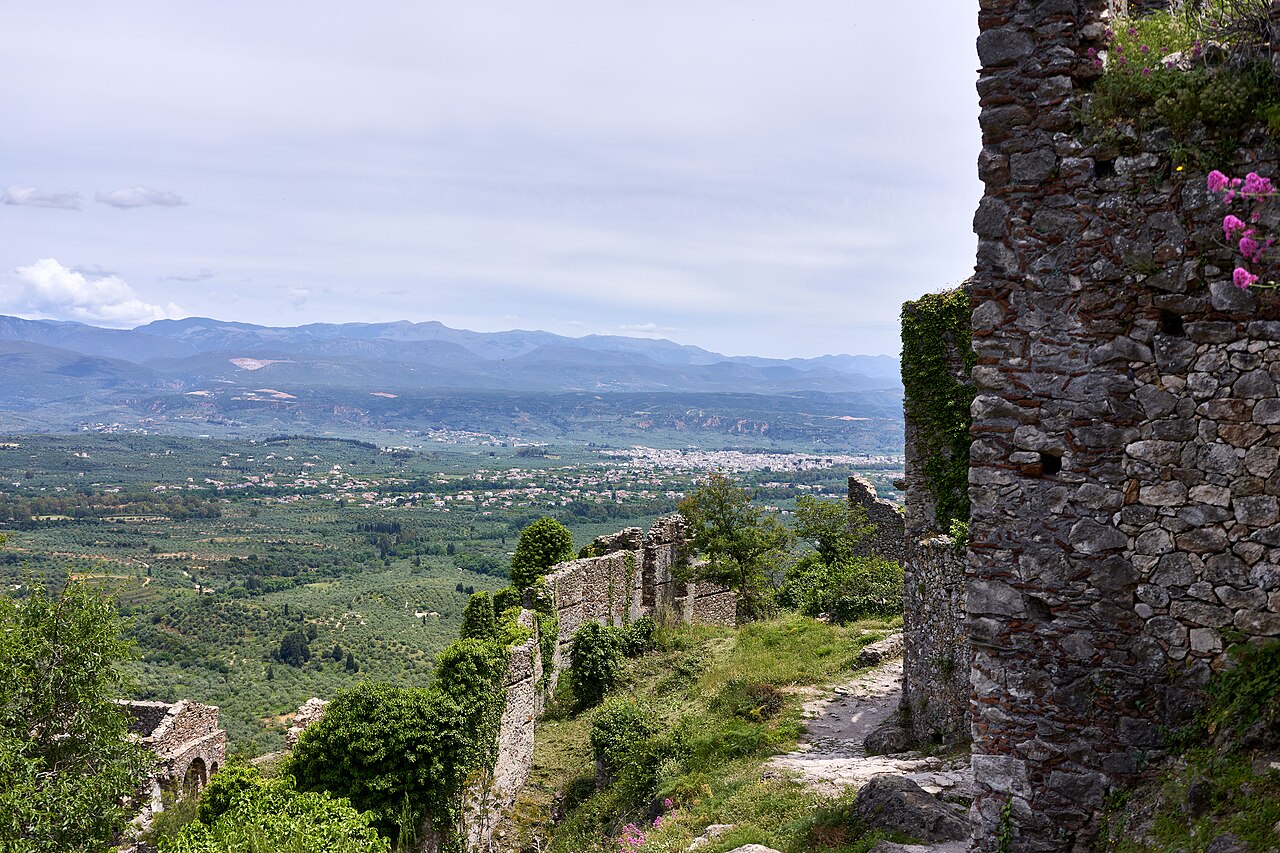
From the walls you'll enjoy panoramic views across:
- Sparta
- The Evrotas Valley
- Olive groves stretching for miles
- The Taygetos Mountains
On a clear day, the scenery is unforgettable.
Many visitors consider this viewpoint the highlight of the entire trip.
Explore the Quiet Streets
One of the joys of Mystras is wandering through the remains of its medieval neighborhoods.
Stone stairways connect churches, homes, monasteries, and gardens.
Unlike many archaeological sites where buildings are isolated, Mystras feels like a real town.
As you walk, you'll notice:
- Ancient archways
- Stone houses
- Narrow pathways
- Wildflowers growing among the ruins
- Birds singing in the surrounding forest
It's easy to lose track of time here.
A Photographer's Dream
If you enjoy photography, Mystras offers endless opportunities.
Some favorite subjects include:
- Byzantine domes
- Ancient stone walls
- Mountain landscapes
- Monastery courtyards
- Olive groves below
- Panoramic viewpoints
- Historic frescoes (where photography is permitted)
Morning and late afternoon provide the softest light and the fewest visitors.
Where to Eat
After exploring the site, head to the nearby modern village of Mystras or continue a few minutes to Sparta for lunch.
You'll find traditional tavernas serving classic Peloponnesian dishes such as:
- Moussaka
- Grilled lamb
- Stuffed vegetables
- Fresh salads
- Local cheeses
- Homemade pies
- Olive oil produced in the surrounding region
Pair your meal with a glass of local wine before beginning the drive back to Nafplio.
Suggested One-Day Itinerary
Here's an easy schedule that allows you to enjoy Mystras without rushing:
8:00 AM – Leave Nafplio
10:00 AM – Arrive at Mystras
10:15 AM – Begin exploring the archaeological site
12:30 PM – Visit the Palace of the Despots and nearby churches
1:30 PM – Climb to the fortress for panoramic views
2:30 PM – Lunch in Mystras village or Sparta
4:00 PM – Enjoy a coffee before heading back
6:00 PM – Arrive in Nafplio
Practical Tips for Visiting Mystras
To make the most of your visit:
- Wear comfortable walking or hiking shoes with good grip.
- Bring at least one bottle of water per person, especially in summer.
- Wear sunscreen and a hat, as many areas are exposed to the sun.
- Dress modestly if you plan to enter the active monasteries (covered shoulders and knees are appreciated).
- Allow at least three hours to explore the site — there's much more to see than many visitors expect.
- Purchase tickets online in advance during the busiest months if possible, to save time at the entrance.
- Start early in the day to avoid the midday heat and enjoy a quieter experience.
Is a Day Trip from Nafplio to Mystras Worth It?
Without a doubt.
While Nafplio is surrounded by some of Greece's greatest ancient sites, Mystras introduces you to an entirely different chapter of the country's history. Instead of classical temples and Mycenaean tombs, you'll discover a thriving medieval city that preserves the legacy of the Byzantine Empire in extraordinary detail.
The combination of history, architecture, mountain scenery, and peaceful surroundings makes Mystras one of the most memorable destinations in the Peloponnese. It rewards visitors who enjoy exploring on foot, taking their time, and uncovering stories hidden among ancient walls.
If you're planning several day trips from Nafplio, Mystras deserves a place on your itinerary. It may require a little more driving than some other excursions, but the experience is unlike anywhere else in Greece. By the time you return to Nafplio in the evening, you'll have walked through centuries of history and seen one of the country's most remarkable UNESCO World Heritage Sites — a journey well worth making.
-
From Nafplio to Tiryns
Tiryns is an ancient city located just a few kilometers away from the picturesque...
-
From Nafplio to Mycenae
Mycenae is an ancient city located in the northeastern part of the Peloponnese peninsula...
-
From Nafplio to Lake Doxa
Lake Doxa is a stunning freshwater lake located in the Corinthian Mountains, Greece....
-
From Nafplio to Hydra
Embarking on a Greek island adventure is a dream come true for many travelers. If...
-
From Nafplio to Porto Heli
If you find yourself in Nafplio, and are craving a delightful day trip to soak in...
-
From Nafplio to Nemea
While visiting Nafplio, we highly recommend taking a day trip to Nemea, a historic...